

In a world where plastic seems to be the reigning champion of packaging, eco-friendly options are stepping into the ring, ready to throw down. It’s time to give Mother Earth a break and embrace materials that are as kind to the planet as they are to our products. Eco-friendly packaging isn’t just a trend; it’s a revolution that’s turning heads and saving seas.
Imagine unboxing your latest online purchase and feeling good about the packaging instead of guilty. With biodegradable, compostable, and recyclable options popping up everywhere, it’s easier than ever to make sustainable choices. Plus, who wouldn’t want to impress their friends with their eco-savvy shopping habits? So let’s dive into the world of eco-friendly packaging and discover how it can make a difference—one box at a time.
Overview of Eco-Friendly Packaging
Eco-friendly packaging offers a sustainable solution that reduces environmental impact. Materials like biodegradable plastics break down naturally, curtailing landfill waste. Compostable packaging transforms into nutrient-rich soil, promoting a circular economy. Recyclable options allow consumers to participate in waste reduction, giving products a second life.
Production processes for eco-friendly packaging often consume fewer resources and energy than traditional alternatives. Brands find that using sustainable materials enhances their reputation, appealing to environmentally conscious consumers. Consumer demand for eco-friendly products has surged, influencing companies to adopt greener practices.
Studies show that 74% of consumers prefer brands that use sustainable packaging solutions. Many businesses implement eco-friendly packaging, recognizing it as a competitive advantage. Cost-effective options exist within eco-friendly materials, enabling small businesses to prioritize sustainability without sacrificing efficiency.
Transitioning to eco-friendly packaging requires strategic planning. Companies assess current supply chains and consider partnerships with sustainable manufacturers. Investing in research and development can lead to innovative packaging solutions, further supporting environmental goals.
Transparency in packaging choices fosters consumer trust. Companies communicate their sustainability efforts through labeling and marketing. Educating consumers about the importance of eco-friendly packaging contributes to broader environmental awareness.
Adopting eco-friendly packaging contributes positively to corporate responsibility initiatives. By committing to sustainability, businesses not only enhance their brand image but also collaborate in the fight against climate change. The shift toward eco-friendly packaging signifies a critical step toward a more sustainable future.
Types of Eco-Friendly Packaging
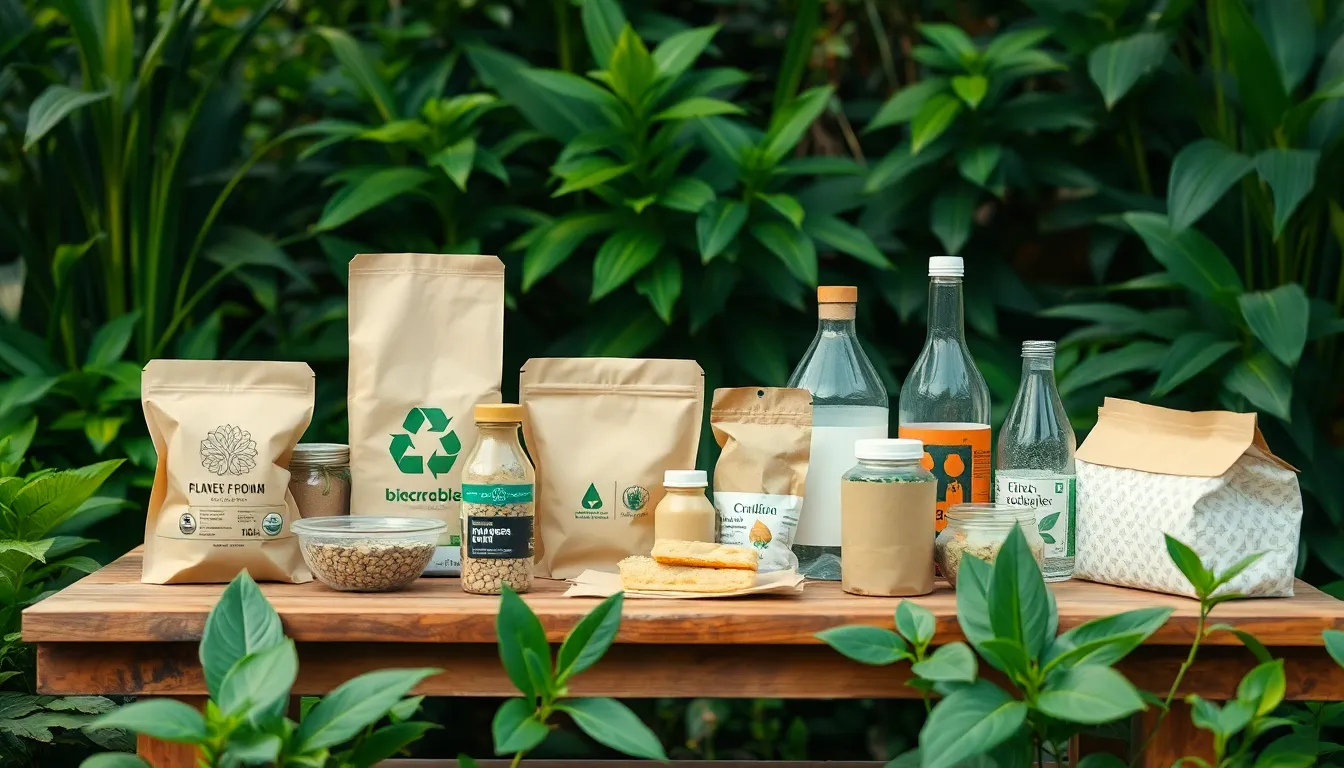
Eco-friendly packaging comes in various forms, each contributing to a sustainable future. Understanding the types helps consumers make informed choices.
Biodegradable Materials
Biodegradable materials break down naturally in the environment, minimizing landfill waste. Common examples include plant-based plastics and paper products. These materials decompose through the action of microorganisms, returning nutrients to the soil. An eco-conscious choice, biodegradable options incorporate renewable resources to reduce reliance on fossil fuels. Companies that use biodegradable materials often enhance their eco-friendly credentials, appealing to sustainability-minded consumers.
Recyclable Materials
Recyclable materials play a vital role in reducing waste and supporting the circular economy. Paper, glass, and certain plastics can easily be repurposed into new products. This recycling process conserves resources, often requiring less energy than producing new materials from scratch. When consumers choose items with recyclable packaging, they actively participate in waste reduction efforts. Many municipalities offer accessible recycling programs, encouraging widespread participation in sustainable practices.
Compostable Packaging
Compostable packaging offers an alternative that enriches soil while minimizing waste. This type of packaging decomposes into organic matter, supporting healthy ecosystems. Common compostable materials include bioplastics and plant-derived fibers. Companies that prioritize compostable options often align with environmentally responsible practices, appealing to eco-conscious customers. Utilizing compostable packaging can also enhance a brand’s commitment to sustainability, attracting consumers looking for greener choices.
Benefits of Eco-Friendly Packaging
Eco-friendly packaging offers significant advantages for the environment, the economy, and consumer preferences. Understanding these benefits can encourage more businesses to adopt sustainable practices.
Environmental Impact
Choosing eco-friendly packaging significantly reduces environmental harm. Sustainable materials, including biodegradable and compostable options, minimize landfill waste and lower greenhouse gas emissions. These materials break down naturally, returning nutrients to the soil. Recyclable packaging supports the circular economy, allowing items to be repurposed rather than discarded. This transition leads to less reliance on fossil fuels and protects natural resources. By opting for eco-friendly packaging, companies actively contribute to climate change mitigation and promote a healthier planet.
Economic Advantages
Investing in eco-friendly packaging brings tangible economic benefits. Many businesses find that sustainable options often reduce overall production costs through resource efficiency. Companies that embrace eco-friendly materials can attract a growing segment of eco-conscious consumers. Furthermore, these businesses experience improved brand loyalty, yielding higher retention rates. Smaller firms can leverage cost-effective solutions, allowing for sustainability without overspending. Embracing these practices can also open up new market opportunities and partnerships, enhancing overall profitability.
Consumer Preferences
Consumer demand continues to shift towards environmentally friendly products. Research indicates that 74% of individuals prefer brands using sustainable packaging solutions. This shift influences purchasing decisions, as buyers increasingly prioritize eco-conscious companies. Transparency in branding fosters trust and loyalty among consumers. Educated shoppers seek information about packaging choices, wanting to support businesses that align with their values. Adopting eco-friendly packaging allows companies to meet this rising demand while cultivating an image of responsibility and care for the environment.
Challenges in Adoption
Adopting eco-friendly packaging presents several challenges that companies face as they transition from traditional materials.
Cost Considerations
Cost often tops the list of concerns for businesses considering eco-friendly packaging. Sustainable materials can be more expensive due to limited availability and production processes. While initial investments may seem daunting, long-term savings may arise from improved brand loyalty and reduced waste management costs. Companies that prioritize sustainable options may realize a competitive advantage through enhanced reputation. Balancing budget constraints with eco-conscious choices requires strategic investment, emphasizing the potential return on investment.
Supply Chain Issues
Supply chain complications frequently arise when switching to eco-friendly packaging. Sourcing sustainable materials often involves identifying suppliers committed to environmentally friendly practices. Many companies face delays due to limited access to reliable suppliers or inefficiencies in existing logistics. Adapting current supply chains to integrate eco-friendly materials may involve restructuring partnerships. Collaboration with suppliers can facilitate smoother transitions, but this demands patience and strategic planning. Ensuring a transparent supply chain reinforces consumer trust and highlights a company’s commitment to sustainability.
Future Trends in Eco-Friendly Packaging
Innovation drives the future of eco-friendly packaging. Biodegradable materials are evolving, offering enhanced properties that improve degradation rates. Companies focus on plant-based plastics, using renewable resources to minimize reliance on petroleum. Sustainable packaging designs emphasize minimalism, reducing excess material while maintaining product protection.
Recycling technologies advance alongside consumer awareness. Businesses invest in advanced sorting systems, improving recyclability rates for various materials. The circular economy concept gains traction, promoting the reuse of packaging through innovative supply chain approaches. Brands that emphasize recyclable packaging often report increased customer loyalty.
Personalization is becoming a key trend. Custom packaging solutions cater to consumer preferences while minimizing environmental impacts. With more brands adopting unique designs, the market sees a blend of aesthetics and sustainability. The integration of technology, such as QR codes, enables consumers to track the environmental impact of their packaging.
Major corporations are leading the charge. Sustainable packaging commitments from large companies create a ripple effect, encouraging smaller businesses to follow suit. Government regulations also play a role, pushing industries towards greener practices. Countries worldwide are introducing policies that promote eco-friendly alternatives and ban single-use plastics.
Consumer education continues to expand. Awareness campaigns enable shoppers to make informed choices about packaging. Brands that share transparency about their sourcing and production processes gain consumer trust. As environmental consciousness rises, preferences for sustainable options strengthen, shaping market dynamics.
Partnerships between brands and eco-friendly material suppliers evolve. Collaborations foster innovative solutions that address cost challenges while prioritizing sustainability. Joint efforts toward R&D yield new materials with lower environmental impacts. The demand for sustainable alternatives ensures that eco-friendly packaging remains at the forefront of industry trends.
Embracing eco-friendly packaging is more than just a trend; it’s a vital step toward a sustainable future. As consumer preferences shift toward environmentally responsible choices, businesses that prioritize sustainable packaging can enhance their brand image while contributing to the planet’s well-being.
The transition may present challenges, but the long-term benefits far outweigh initial costs. Companies that innovate in this space not only attract eco-conscious consumers but also participate in the broader movement against climate change.
By making informed choices about packaging materials, brands can play a significant role in promoting sustainability and fostering consumer trust. The future of packaging lies in its ability to be both functional and kind to the Earth, paving the way for a greener tomorrow.